In the remodeling industry, there is no faster way to get your phone to ring than Google Ads. When a homeowner types “kitchen remodeler near me” into a search bar, they aren’t just browsing; they are signaling high intent. They have a problem, and they are looking for a professional to solve it immediately.
However, many contractors treat Google Ads like a “magic button”—they press it and expect a flood of profitable projects, only to be disappointed when the leads are too expensive or don’t close.
As we discussed in our foundational guide on Google Ads vs Facebook Ads for Remodelers, Google Ads work best when remodelers understand that they are paying to capture existing demand.
Here is how to determine when remodeling Google Ads are a smart investment and when you should hold off.
When Google Ads Are a Smart Investment
Google Ads (Search) is an “intent-based” platform. Unlike social media, where you interrupt someone’s scrolling, Google places you in front of people who are actively seeking your services.
It makes sense to invest in Google Ads for remodelers when:
- You need leads now: If your pipeline is empty for next month, Google Ads can generate inquiries within 24 to 48 hours of a campaign going live.
- You have a high-margin service: Because Google Ads can be expensive ($20–$100+ per click in some markets), they are most effective for high-ticket projects like whole-home renovations, additions, or high-end kitchen remodels.
- You have a “ready” sales system: If you have someone dedicated to answering the phone and setting appointments immediately, you can capitalize on the urgency of search traffic.
When Google Ads Backfire
The biggest mistake contractors make is assuming that “more traffic” equals “more profit.” If your internal systems are weak, Google Ads will simply help you lose money faster.
Google Ads often fail when:
- Your website lacks social proof: If a homeowner clicks your ad and finds a website with no photos, no testimonials, and a broken contact form, they will bounce. You just paid for a click that had zero chance of converting.
- Your follow-up is slow: Search leads have the shortest shelf life. If you take 24 hours to return a call, that homeowner has already called three other contractors from the search results.
- You are in a “discovery” phase: If you are trying to convince people they need a remodel, Google Ads is the wrong tool. Google is for people who have already decided to remodel and are now choosing who will do it.
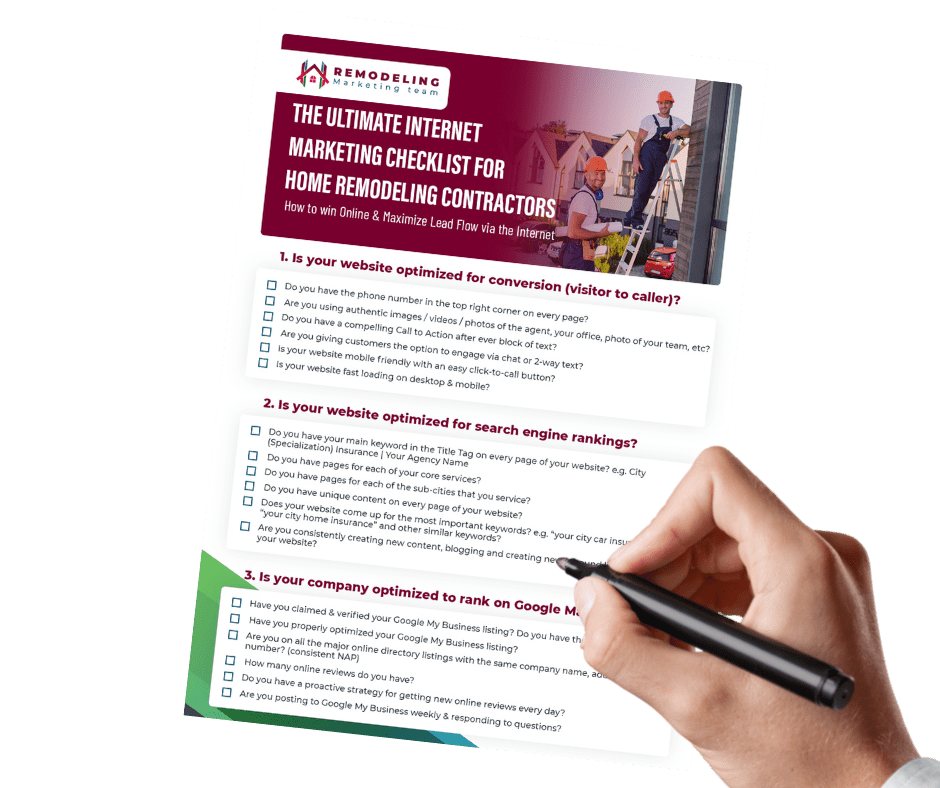
The Remodeler’s Readiness Checklist
Before you spend a single dollar on contractor Google advertising, ensure you can check these four boxes:
- A Dedicated Landing Page: Do not send ad traffic to your homepage. Send it to a page specifically about the service they searched for (e.g., a “Bathroom Remodeling” page for a bathroom search).
- Tracking in Place: You must be able to track not just clicks, but phone calls and form submissions.
- Speed to Lead: You (or your office manager) must be able to respond to new inquiries within 5–15 minutes.
- A Defined Budget: Google Ads requires a “testing” phase. Be prepared to spend consistently for at least 90 days to optimize your campaign.
Common Google Ads Mistakes Contractors Make
- Bidding on “Broad Match” Keywords: If you bid on the word remodeling, Google might show your ad for “DIY remodeling tips” or “remodeling jobs.” This wastes your budget on non-buyers. Use “Phrase Match” or “Exact Match” to stay relevant.
- Ignoring Negative Keywords: You should tell Google exactly who you don’t want to reach. Adding terms like “cheap,” “repair,” or “free” as negative keywords prevents your ads from showing to low-budget leads.
- Vague Ad Copy: Your ad should clearly state what you do and where you do it. “Elite Kitchen Remodeling in [Your City] – Schedule a Design Consultation” is far more effective than “We Do Great Work.”
Final Strategy: The Role of Intent
As noted in our pillar page, Google Ads capture demand while Facebook Ads create it. If your remodeling business is in a growth stage and you have the systems to handle high-intent leads, Google is the ultimate tool for scaling.
However, remember: Paid ads don’t fix broken systems—they expose them. Before you scale your Google Ads spend, ensure your sales process is ready for the heat.
Ready to build a predictable lead system? Schedule a Strategy Session with the Remodeling Marketing Team today.